

Security teams are used to alerts. Over the past decade, organizations have deployed dozens of security tools designed to detect threats, vulnerabilities, and misconfigurations. These tools generate thousands — or sometimes millions — of signals every day.
The problem has never been a lack of alerts. The problem has always been understanding which ones actually matter.
Now, as artificial intelligence spreads across enterprise environments, the same challenge is emerging again — only this time, the stakes are even higher.
The AI Risk Visibility Problem
As organizations begin discovering AI usage, they encounter an unexpected reality. AI adoption is rarely limited to a handful of projects.
Enterprises typically uncover a rapidly expanding ecosystem: internal machine learning models, external AI APIs, AI agents and automation tools, browser extensions and AI copilots, developer tools integrated with large language models, and data pipelines connected to AI systems.
But not every AI system represents the same level of risk. A chatbot analyzing public marketing content does not present the same exposure as an AI model connected to customer financial data.
Why AI Risk Is Different
AI risk is not simply another category of application security.
AI systems interact with data dynamically — through prompts, retrieval systems, and automated actions. This makes it harder to anticipate how data may be accessed or used.
AI systems accumulate permissions over time. AI agents, models, and automation systems often operate through service accounts, tokens, or API credentials that may end up with privileged access to sensitive resources.
AI systems depend on complex supply chains — open-source model packages, third-party APIs, external model providers, container images, and automation frameworks. A vulnerability in one component may impact multiple systems.
The Problem With 'Flat' Security Alerts
When security tools generate alerts without context, they treat each issue independently.
A model endpoint exposed to the internet triggers an alert. A dataset containing sensitive information triggers another. An AI service running with elevated permissions triggers a third.
Viewed individually, each finding may appear manageable. But the true risk may lie in the combination: an exposed model endpoint connected to a sensitive dataset and operating with privileged access represents a very different level of risk.
Introducing AI Risk Classification
To manage AI risk effectively, organizations must begin by classifying AI assets across several dimensions.
AI Asset Type: models, agents, APIs, AI-powered SaaS tools, developer frameworks, and automation services. Each introduces different risk considerations.
Data Sensitivity: from public data to internal operational data, confidential business information, and regulated or personal data. AI systems interacting with sensitive datasets require stronger controls.
Access and Identity Permissions: Does the AI system use a service account? What APIs can it access? Does it interact with production systems?
Exposure Level: Some AI systems operate entirely within internal environments. Others expose APIs to external users or interact with third-party platforms.
From Classification to Risk Scoring
Classification provides the foundation. But to prioritize effectively, organizations need a risk scoring model that evaluates the combination of factors for each AI asset.
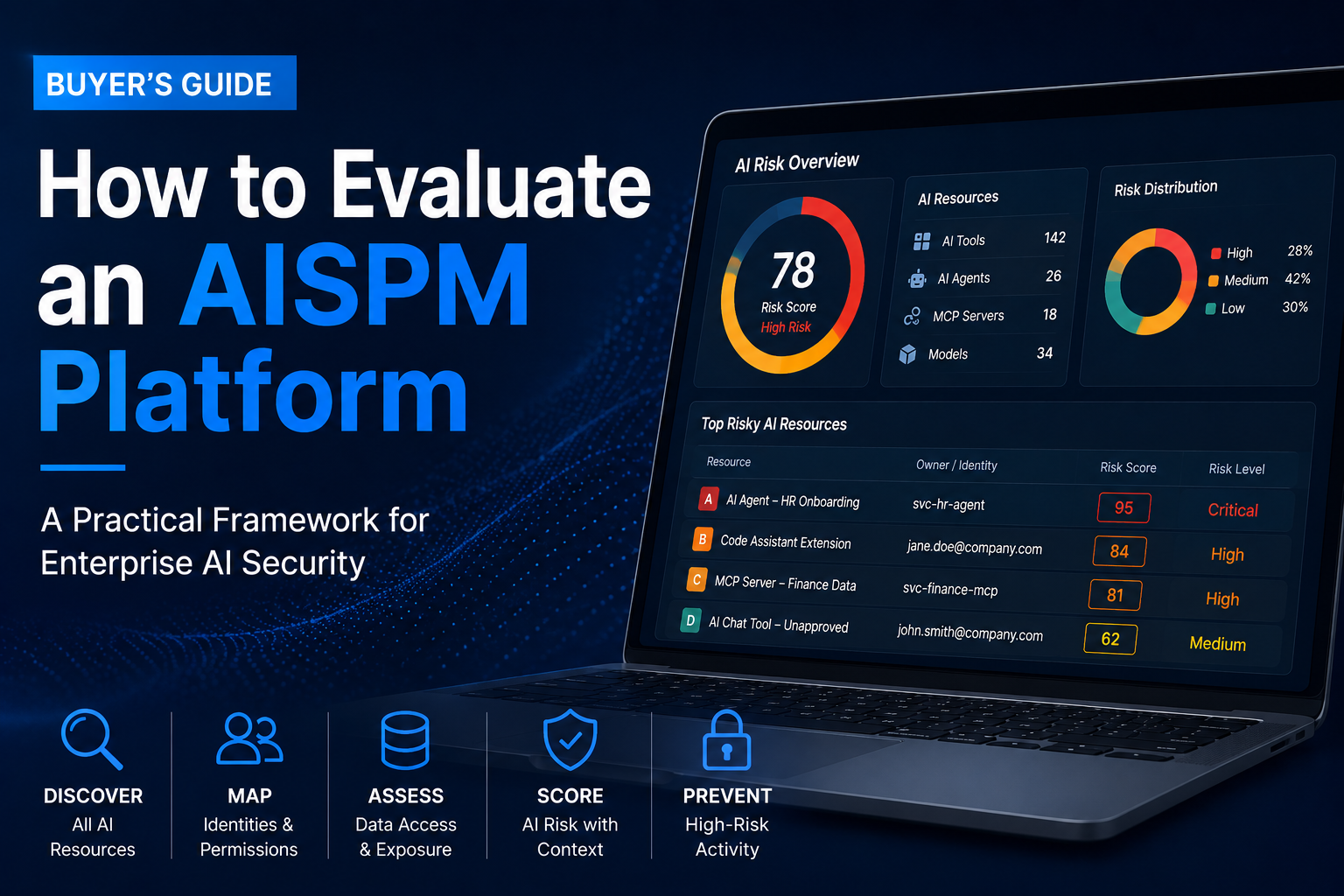
An effective AI risk score considers data sensitivity, identity and access permissions, exposure level, supply chain dependencies, and regulatory implications.
The most dangerous scenarios — toxic combinations — emerge when multiple high-risk factors converge: a model with privileged access to sensitive data, exposed externally, with vulnerable dependencies.
By scoring these combinations, security teams can focus on the risks most likely to result in real business impact rather than chasing thousands of low-priority alerts.
Building an Operational AI Risk Program
The shift from flat alerts to classification and scoring represents a fundamental evolution in how organizations approach AI security.
Security teams must discover all AI assets across the enterprise, classify them by type, data sensitivity, access level, and exposure, score risk based on the combination of these factors, and continuously monitor as the AI ecosystem evolves.
This approach mirrors the maturity curve organizations followed in cloud security — moving from basic visibility to contextual risk prioritization.
The organizations that adopt this model early will be best positioned to manage AI risk at scale, enabling innovation while maintaining the security discipline that enterprise environments demand.