How Can Enterprises Detect AI Permission Drift Before Agents Become Overprivileged?
Published:
August 27, 2026
Niall Browne
Summary
AI agents, service accounts, OAuth grants, API keys, MCP servers, plugins, and automated workflows can gain more access over time than they were originally approved to have. This article explains how enterprises can detect AI permission drift early by baselining every AI identity, mapping the full permission chain, monitoring scope changes, identifying stale or shared credentials, scoring drift by business context, and remediating overprivileged AI access before it creates high-risk exposure.
Key Takeaways
AI permission drift happens when an AI resource’s current access no longer matches the access it was originally approved to have.
Permission drift can happen through OAuth scope expansion, connector changes, role inheritance, group membership changes, shared credentials, production migrations, temporary exceptions, or new tools added to an agent workflow.
Every production AI agent, high-impact assistant, MCP server, and automated AI workflow should have an approved permission baseline.
AI identity reviews should include human identities, service accounts, API keys, OAuth grants, workload identities, cloud roles, tokens, and credentials used by agents, plugins, skills, and MCP servers.
Security teams should map the full identity and permission chain behind every AI resource, including the user, machine identity, delegated scopes, connected tools, and downstream systems.
OAuth scope expansion and re-consent events should trigger review when an AI integration gains new access to email, files, CRM systems, write permissions, exports, or administrative functions.
Stale, shared, long-lived, or ownerless credentials should be treated as risk signals because they can remain valid after ownership, business purpose, or system architecture changes.
Permission drift should be scored by context, not just by the size of the change. A small permission change can become critical if it adds access to sensitive data, production systems, or high-impact actions.
High-risk AI identities should have periodic owner attestation to confirm that the resource still exists, still supports the business purpose, and still needs its current permissions.
Clear permission-drift patterns should trigger automated remediation, including owner confirmation, scope reduction, token rotation, access revocation, workflow routing, or blocking.
Enterprise AI identities rarely stay exactly as they were on launch day. An agent may begin with read-only access to one application, then gain another connector, a broader OAuth grant, a shared service account, or production privileges as the use case expands. Each change can appear reasonable. Together, they can create an overprivileged AI workflow that no longer matches the original security review.
AIBound places identity immediately after discovery in its 5 Steps to Discover, Score, and Prevent High-Risk AI walkthrough. That ordering matters. Discovering an AI resource tells security teams that it exists. Understanding the identity and permissions behind it reveals what the resource can actually reach, change, export, or approve.
This article explains how security teams can identify permission drift early, distinguish legitimate access growth from dangerous privilege creep, and build a continuous control process that keeps AI identities aligned with business purpose.
Direct Answer: Baseline Every AI Identity, Then Detect and Remediate Material Permission Changes
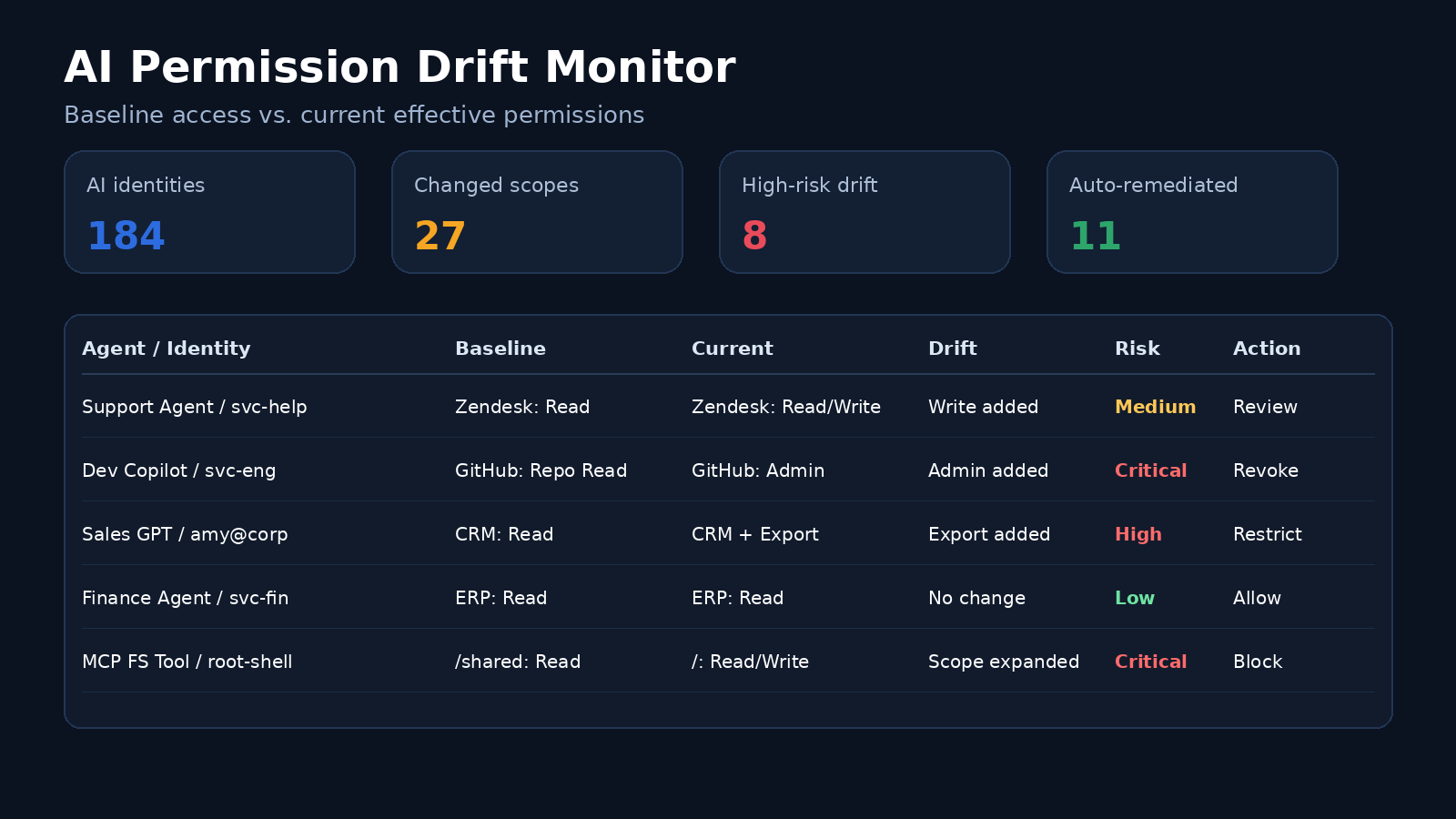
Enterprises can control AI permission drift by maintaining a current baseline for each AI identity, continuously comparing effective permissions against that baseline, and automatically escalating changes that increase access to sensitive data, production systems, high-impact actions, or external destinations. The review should cover human identities, service accounts, API keys, OAuth grants, workload identities, cloud roles, and credentials used by agents, plugins, skills, and MCP servers.
The goal is not to freeze permissions forever. AI use cases evolve. The goal is to make every meaningful increase in authority visible, attributable, reviewable, and reversible.
Figure 1. Permission drift becomes actionable when you compare baseline and current effective permissions in one view.
Why AI Permission Drift Deserves Its Own Security Program
Permission drift is the gradual divergence between the access an AI resource was originally approved to have and the access it can use today. It can happen through role inheritance, connector changes, OAuth re-consent, shared credentials, team transfers, temporary exceptions that never expire, production migrations, or new tools added to an agent workflow.
Agentic behavior amplifies the risk. The OWASP guidance on Excessive Agency identifies excessive functionality, excessive permissions, and excessive autonomy as root causes of damaging actions in LLM-based systems. An AI workflow does not need a software exploit if the organization has already given it more authority than the task requires.
Traditional IAM reviews may also miss the complete AI context. An identity platform can show that a service account has GitHub and database access. However, security still needs to know which agent uses that identity, what skills the agent can invoke, which data it handles, whether it acts autonomously, and whether those permissions are still necessary.
1. Establish an Approved Permission Baseline for Every Material AI Resource
Every production AI agent, high-impact assistant, MCP server, or automated AI workflow should have an approved permission baseline. The baseline is the security team’s documented answer to a simple question: what authority does this resource need to perform its intended job safely?
Human or machine identity used by the AI resource.
Business owner and technical owner.
Approved applications, repositories, databases, APIs, and data categories.
Read, write, delete, export, deploy, approve, or administrative capabilities.
OAuth scopes, cloud roles, group memberships, and inherited permissions.
Credential type, issue date, rotation policy, and expected lifetime.
Whether high-impact actions require human approval.
Approved environment, such as test, staging, or production.
AIBound’s AI Identity Security positioning is useful here because it treats the identity and its permissions as part of the AI resource itself. That makes it easier to compare the intended role with the effective authority actually available at runtime.
2. Map the Complete Identity and Permission Chain
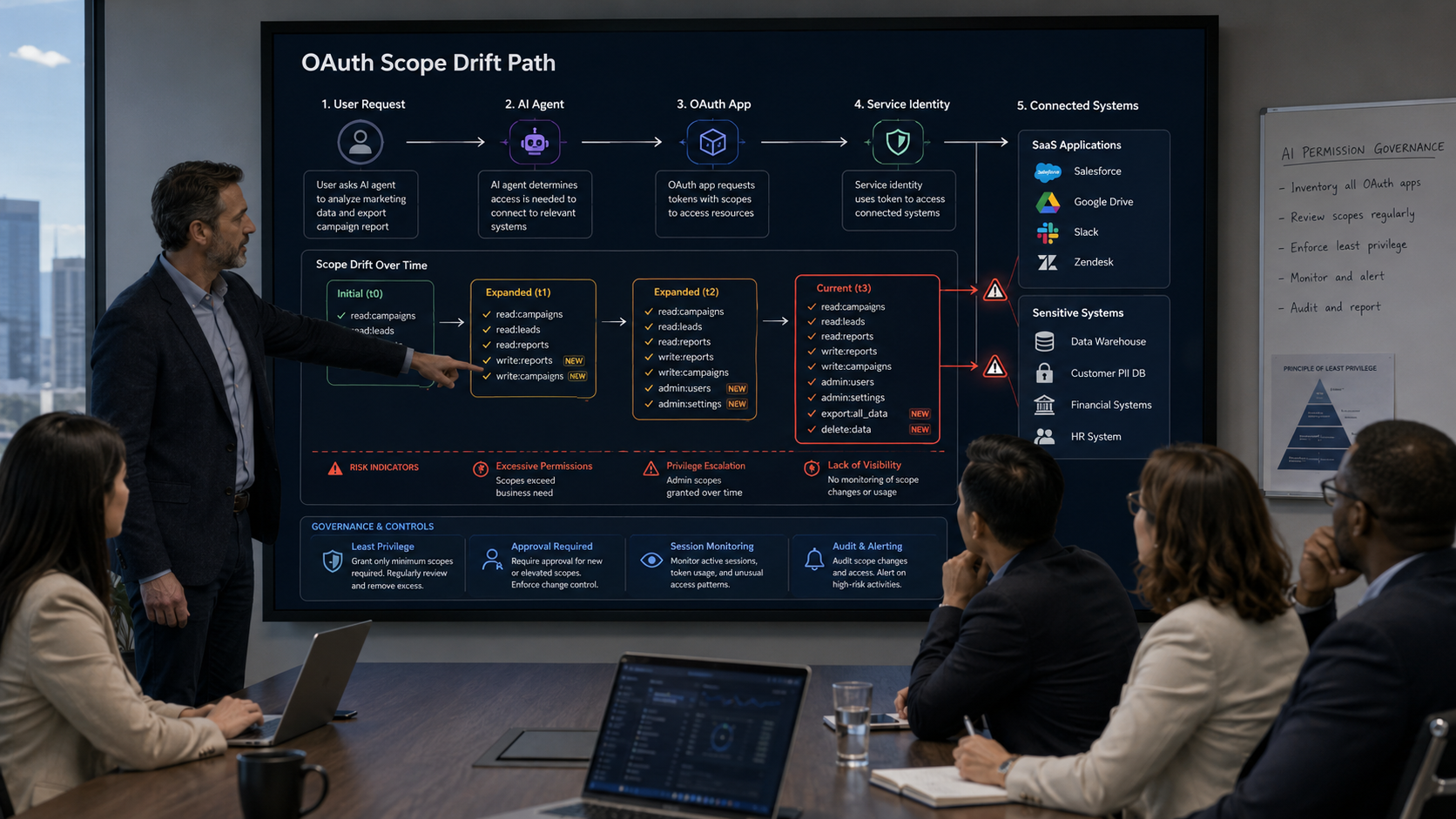
The visible agent name is often several layers away from the credentials that ultimately authorize an action. A user may invoke an assistant, which calls an OAuth application, which uses a service identity, which reaches a SaaS platform or cloud role. Drift can occur at any point in that chain.
Security teams should therefore map the resource, human identity, machine identity, delegated scopes, connected tools, and downstream systems as one relationship graph. AIBound’s Identities & Connections platform is designed around this relationship view, including identity maps, permission audits, excessive-access alerts, service-account registries, and blast-radius reporting.
This mapping prevents a common review failure: approving an application while ignoring the privilege of the identity it operates as. The same tool can be low risk with a read-only project account and critical with an administrator service account.
3. Monitor OAuth Scope Expansion and Re-Consent Events
OAuth is a common source of AI permission drift because scope changes can appear during routine feature expansion. An assistant that originally requested basic profile and read access may later ask for email, file, CRM, or write permissions. If users or administrators re-consent without a new security review, the AI resource can quietly gain authority that was never included in the initial assessment.
The OAuth 2.0 Security Best Current Practice, RFC 9700, reinforces modern authorization safeguards such as stronger authorization-code protections and secure token handling. For AI governance, the operational lesson is broader: scopes are security-sensitive configuration, not a one-time setup detail.
Alert when an existing AI integration requests new scopes.
Compare granted scopes with the last approved baseline.
Flag transitions from read to write, export, delete, or administrative access.
Require re-review when an OAuth application reaches a new data domain.
Expire unused grants and remove consent when the pilot or project ends.
Record who approved each scope increase and why.
Figure 2. Permission drift often develops through several individually reasonable changes that combine into excessive access.
4. Detect Stale, Shared, and Long-Lived Credentials
A stale credential can be more dangerous than an actively monitored one because it may remain valid after ownership, business purpose, or system architecture changes. Shared service accounts create a related problem: security teams may know that an account is active but not which agent, workflow, or employee is responsible for each action.
A practical AI identity program should score credential age, recent usage, owner status, environment, privilege level, and whether the credential is dedicated to one AI resource. Long-lived administrative tokens with no clear owner should receive immediate attention even if no malicious activity has been observed.
Prefer short-lived tokens and managed workload identities where possible.
Replace shared administrator credentials with dedicated service identities.
Set review and expiration dates for temporary AI pilots.
Rotate credentials after material connector or ownership changes.
Disable unused identities rather than leaving them dormant but valid.
Treat unknown ownership as a risk signal, not an administrative inconvenience.
5. Track Environment, Group, and Connector Changes
Permissions can expand without an explicit role edit. An agent moved from test to production may inherit production data. A service identity added to a new group may gain indirect access. A new MCP server may expose tools that were not present during the original review. A browser extension may gain broader site access after an update.
Treat these events as permission-relevant drift because they change the effective authority or blast radius of the AI resource. Security teams should monitor not only IAM changes but also deployment location, group membership, connector inventory, tool descriptions, and data-source relationships.
6. Score Drift by Context, Not by Change Size Alone
A small permission change can be more dangerous than a large one. Adding read access to a public knowledge base may have little impact. Adding a single export permission to a customer database can materially change the workflow's risk.
The NIST AI Risk Management Framework supports contextual risk management through its Govern, Map, Measure, and Manage functions. Permission-drift scoring should similarly combine identity privilege, data sensitivity, environment, autonomy, external exposure, action severity, business criticality, and compensating controls.
Low: permission change does not expand data sensitivity or action authority.
Moderate: new access is useful but broader than the original baseline.
High: write, export, deployment, or privileged access is added to sensitive systems.
Critical: multiple factors converge, such as an autonomous agent, administrator identity, production access, and regulated data.
7. Require Periodic Owner Attestation for High-Risk AI Identities
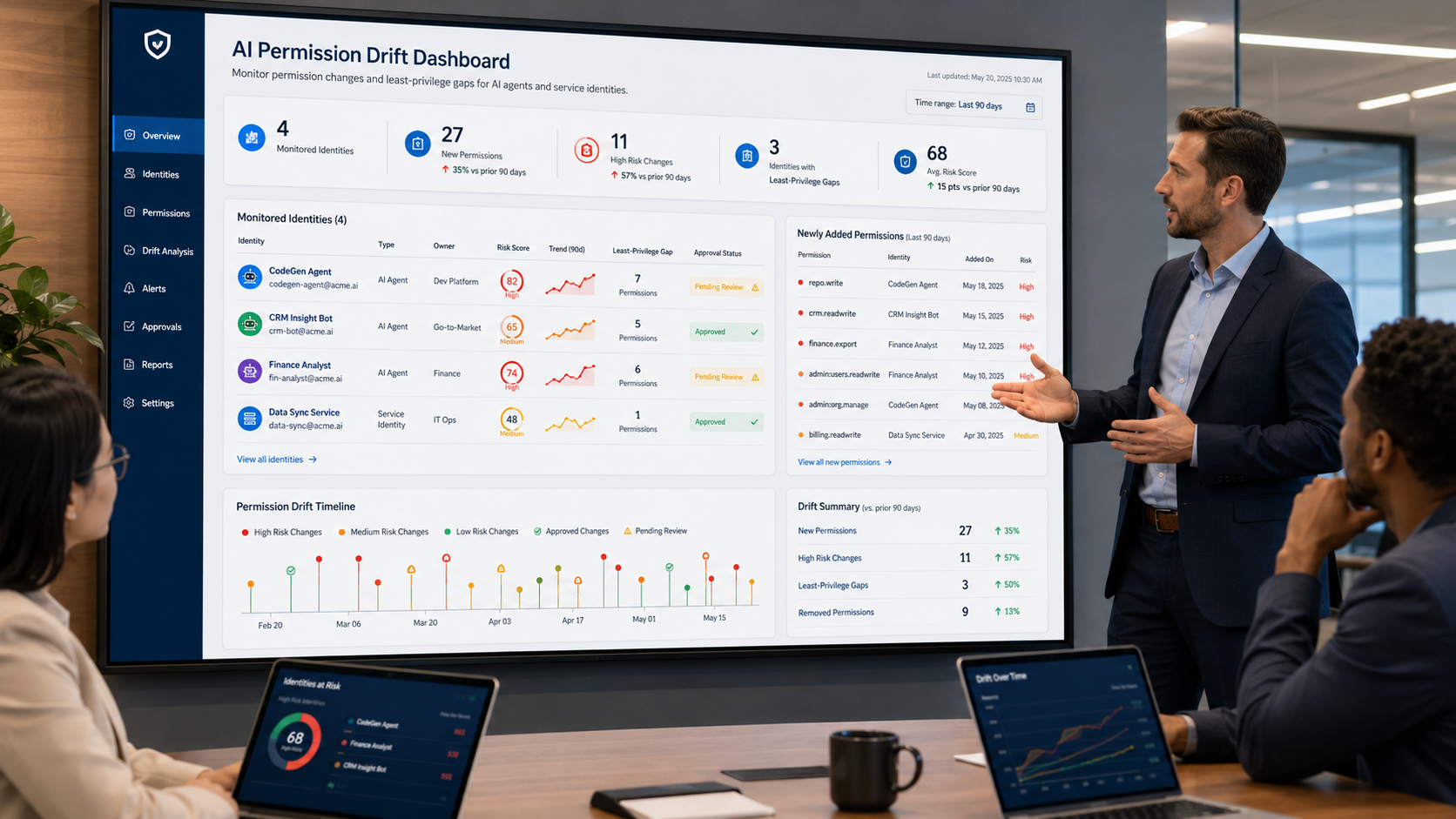
Supplement continuous telemetry with accountable human review. Owners should periodically confirm that the AI resource still exists, still supports the stated business purpose, still needs the current permissions, and still has appropriate approval boundaries.
Attestation is especially important after reorganizations, employee transfers, vendor changes, platform migrations, and production launches. A service account can remain technically healthy while its original owner or use case has disappeared.
Figure 3. High-risk AI access reviews should examine ownership, purpose, credential age, permission scope, environment, and recent use together.
8. Automate Remediation for Clear Permission-Drift Patterns
Manual tickets alone will not keep pace with rapidly changing AI environments. Security teams need graduated response paths that can restore the approved baseline quickly without blocking every legitimate change.
AIBound’s Policy Enforcement platform illustrates this operational model by connecting risk signals to actions such as blocking, alerting, ticketing, or workflow routing. For permission drift, the same principle can create predictable responses.
Alert and request owner confirmation for low-impact drift.
Route new high-risk scopes to formal review.
Automatically remove unused or expired access.
Revoke stale tokens and require re-authentication.
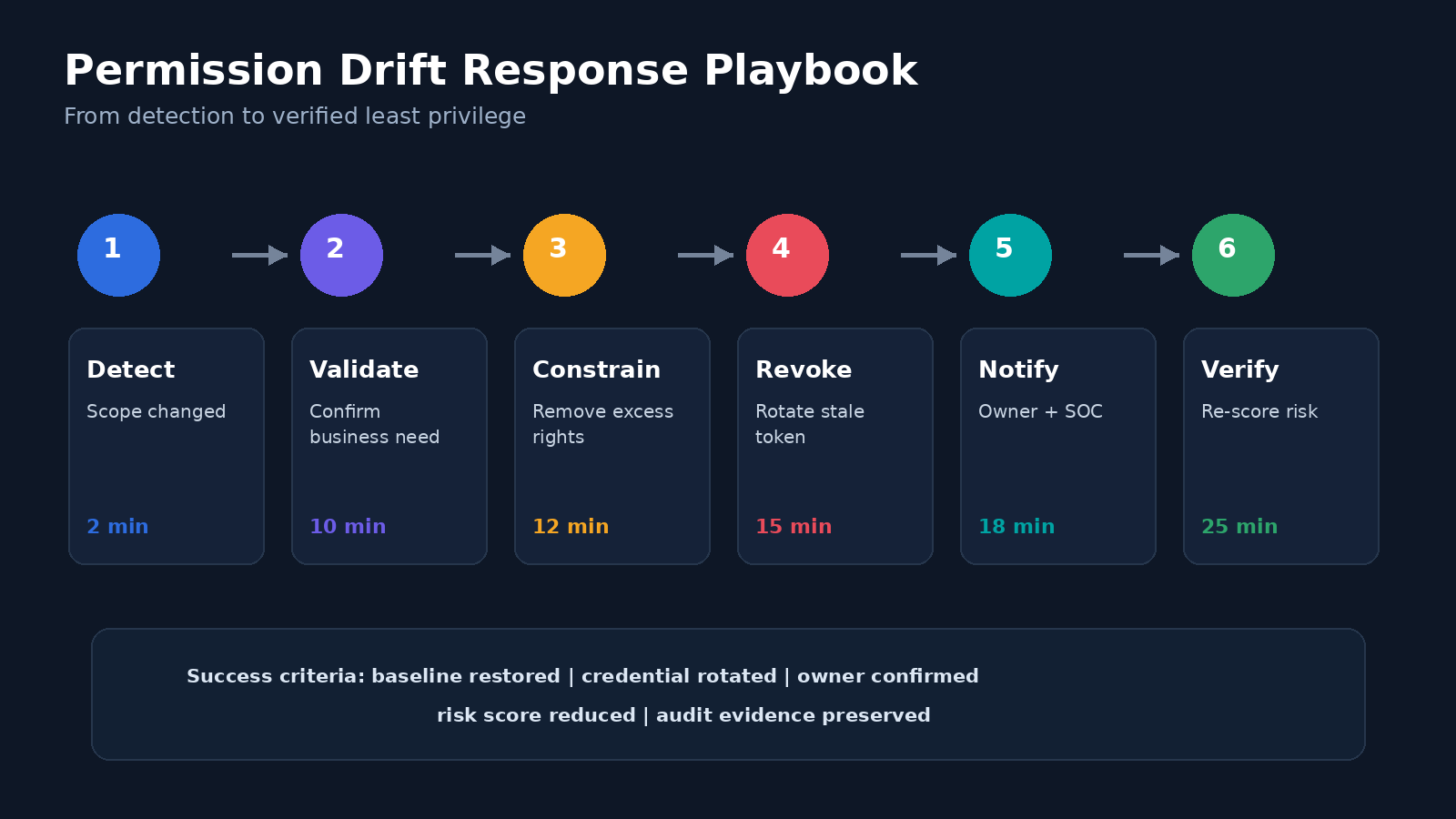
Reduce an identity to its last approved permission set when an unauthorized expansion is detected.
Block an AI resource when drift creates a credible path to high-impact systems.
Open an incident when the change is accompanied by suspicious behavior or data access.
9. Evaluate AI Security Platforms for Drift Detection, Not Just Inventory
A useful AI security platform should do more than list applications. It should link resources to identities, reveal effective permissions, detect overprivileged or stale access, show data connections, and preserve the evidence behind each risk decision.
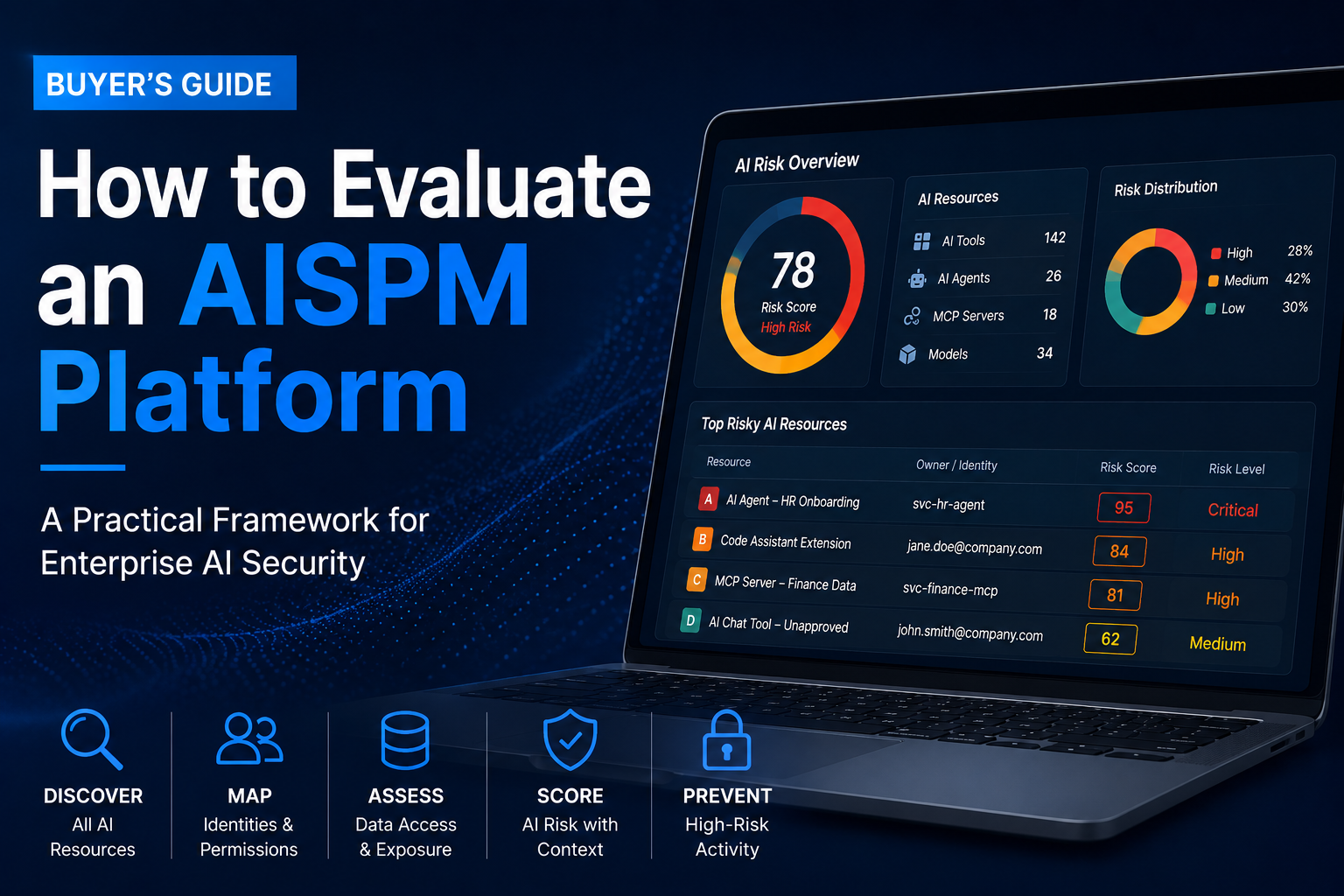
AIBound’s recent guide on evaluating an AISPM platform specifically recommends asking whether a platform can identify overprivileged agents or stale access and connect AI findings to accountable owners and remediation workflows. Those capabilities are central to a mature permission-drift program.
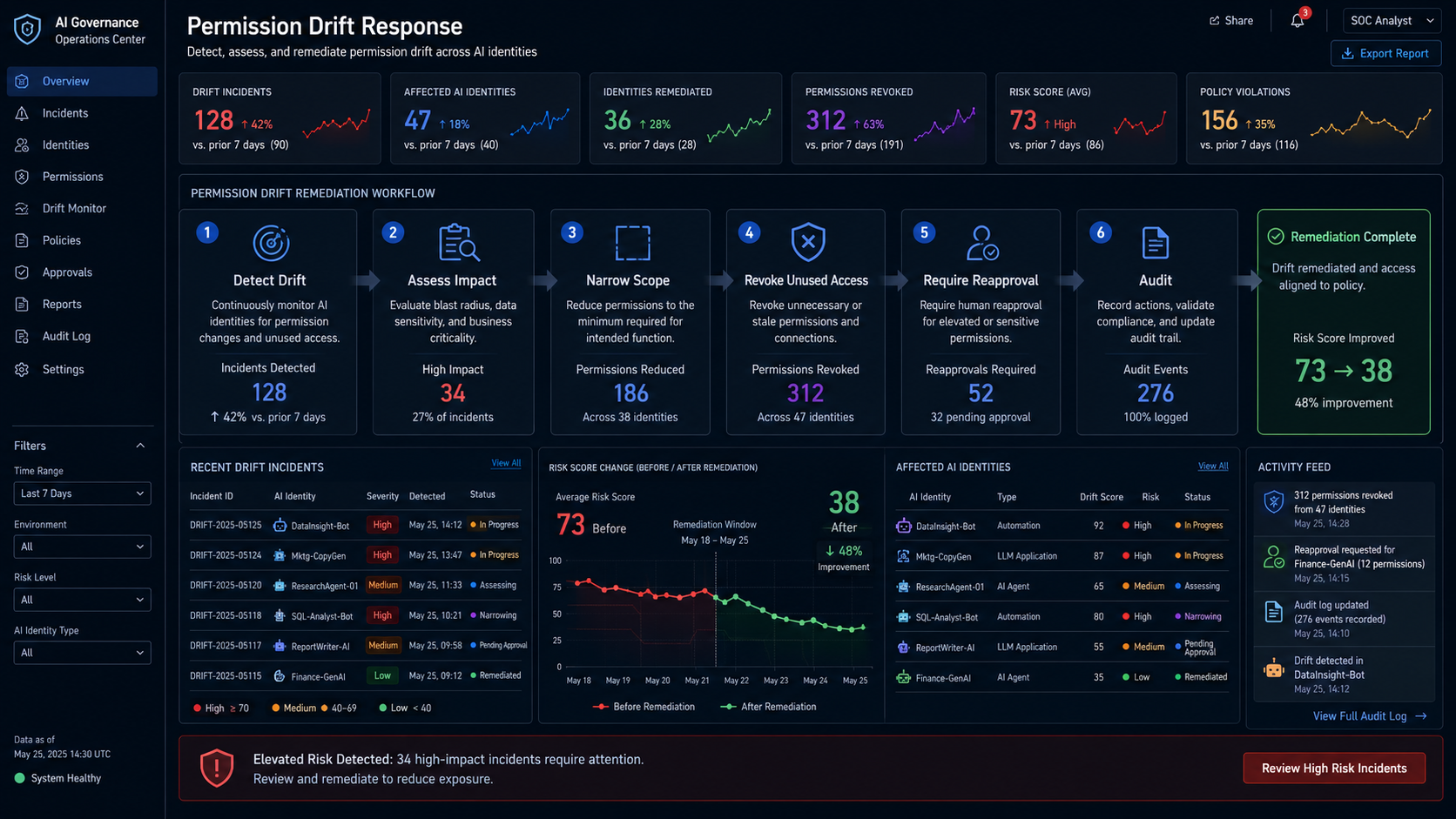
Figure 4. A permission-drift response should move from detection to validation, constraint, credential revocation, owner notification, and verified risk reduction.
A Practical 30-Day AI Permission Drift Program
Inventory production AI agents, MCP servers, high-impact assistants, service accounts, OAuth applications, API keys, and workload identities.
Create an approved permission baseline for each material AI resource and assign a named owner.
Map identities to connected applications, datasets, repositories, APIs, and production systems.
Enable alerts for OAuth scope changes, role changes, group membership changes, connector additions, and production migrations.
Identify shared, long-lived, stale, or ownerless credentials and prioritize them for remediation.
Define risk tiers for permission drift using data sensitivity, privilege, autonomy, environment, and blast radius.
Create automated actions for low-risk review, scope reduction, token rotation, access revocation, and high-risk blocking.
Schedule recurring owner attestations and track whether effective permissions remain aligned with business purpose.
Metrics CISOs Should Track
Percentage of AI identities with a documented baseline.
Number of AI resources with excessive permissions.
New OAuth scopes granted per month.
Shared or ownerless service accounts used by AI.
Credentials older than the approved lifetime.
Mean time from drift detection to access correction.
Permission reductions completed automatically versus manually.
High-risk drift events that reached production systems.
Percentage of high-risk AI identities with current owner attestation.
Frequently Asked Questions
Is permission drift the same as excessive privilege?
Not exactly. Excessive privilege describes the current state of having more authority than necessary. Permission drift describes how access changes over time and moves away from the approved baseline. Drift can lead to excessive privilege, but it can also include ownership, credential, connector, and environment changes that alter risk.
Should every permission change require manual approval?
No. Low-impact changes can often be monitored or automatically approved under policy. Reserve manual approval for changes that increase access to sensitive data, production systems, high-impact actions, privileged roles, or external destinations.
Are service accounts more risky than employee identities?
They can be because service accounts may be long-lived, shared, highly privileged, and less visible to normal user-governance processes. The correct approach is not to ban them but to make them dedicated, owned, scoped, rotated, and continuously monitored.
How often should AI permissions be reviewed?
Continuous technical monitoring should run at all times. Formal owner attestation can be risk-based, such as quarterly for high-risk identities and less frequently for low-risk resources, with immediate review after material scope, ownership, connector, or production changes.
What is the fastest place to start?
Start with autonomous agents and service identities that can write to production systems or reach sensitive data. These combinations create the largest potential blast radius and usually reveal the highest-value permission cleanup opportunities.
Conclusion
AI permission drift is not a rare configuration mistake. It is a predictable consequence of fast-moving AI adoption, expanding integrations, shared identities, and evolving workflows. The security program therefore needs to treat permissions as a continuously changing risk surface.
The strongest approach is to establish a baseline, map the complete identity chain, detect scope and credential changes, score drift using business context, and connect high-risk findings to rapid remediation. When every AI identity is visible, owned, appropriately scoped, and continuously monitored, organizations can expand AI adoption without allowing quiet privilege creep to become the next attack path.
See Your AI Attack Surface
Discover every AI tool, agent, and model running in your enterprise — before attackers do.