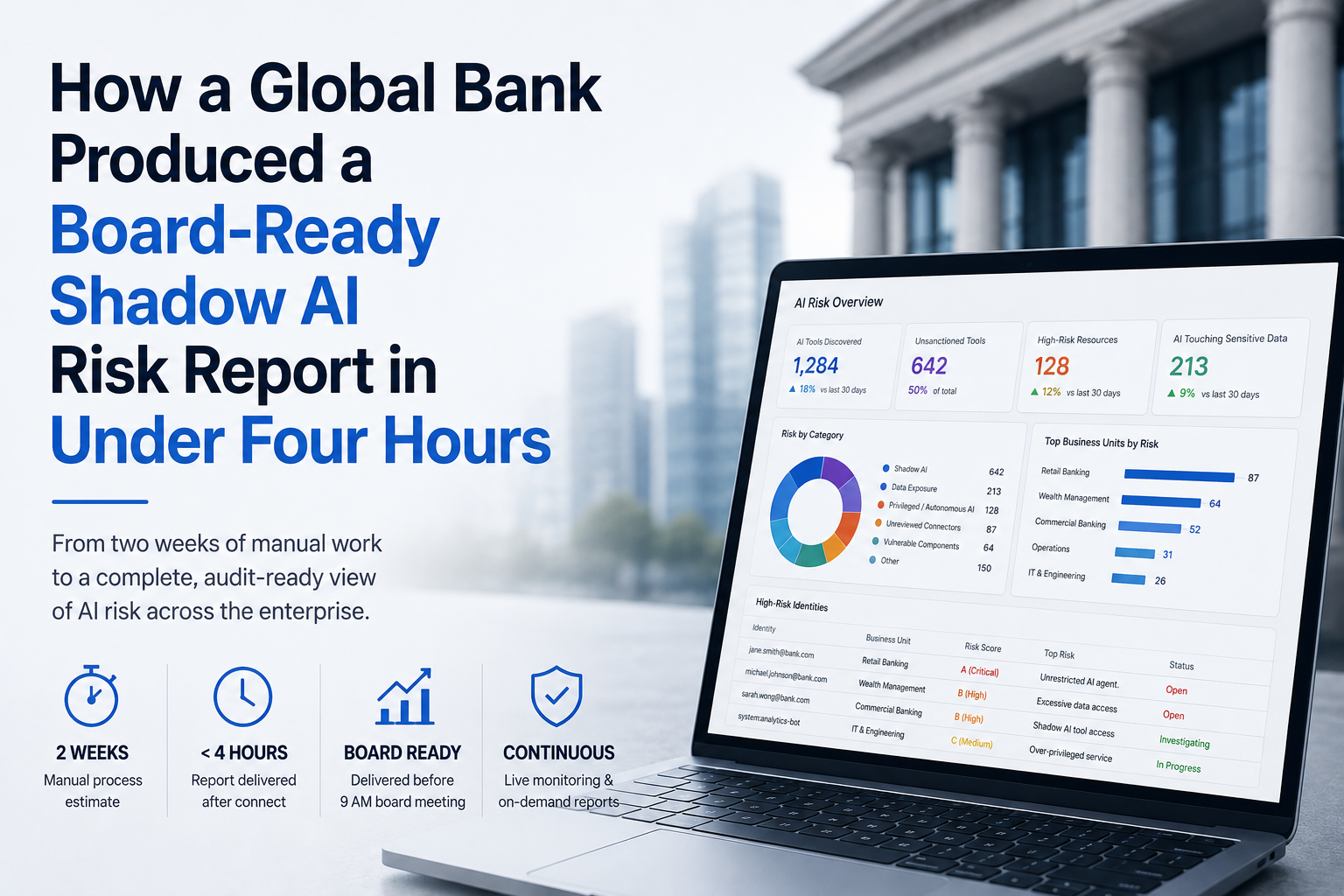
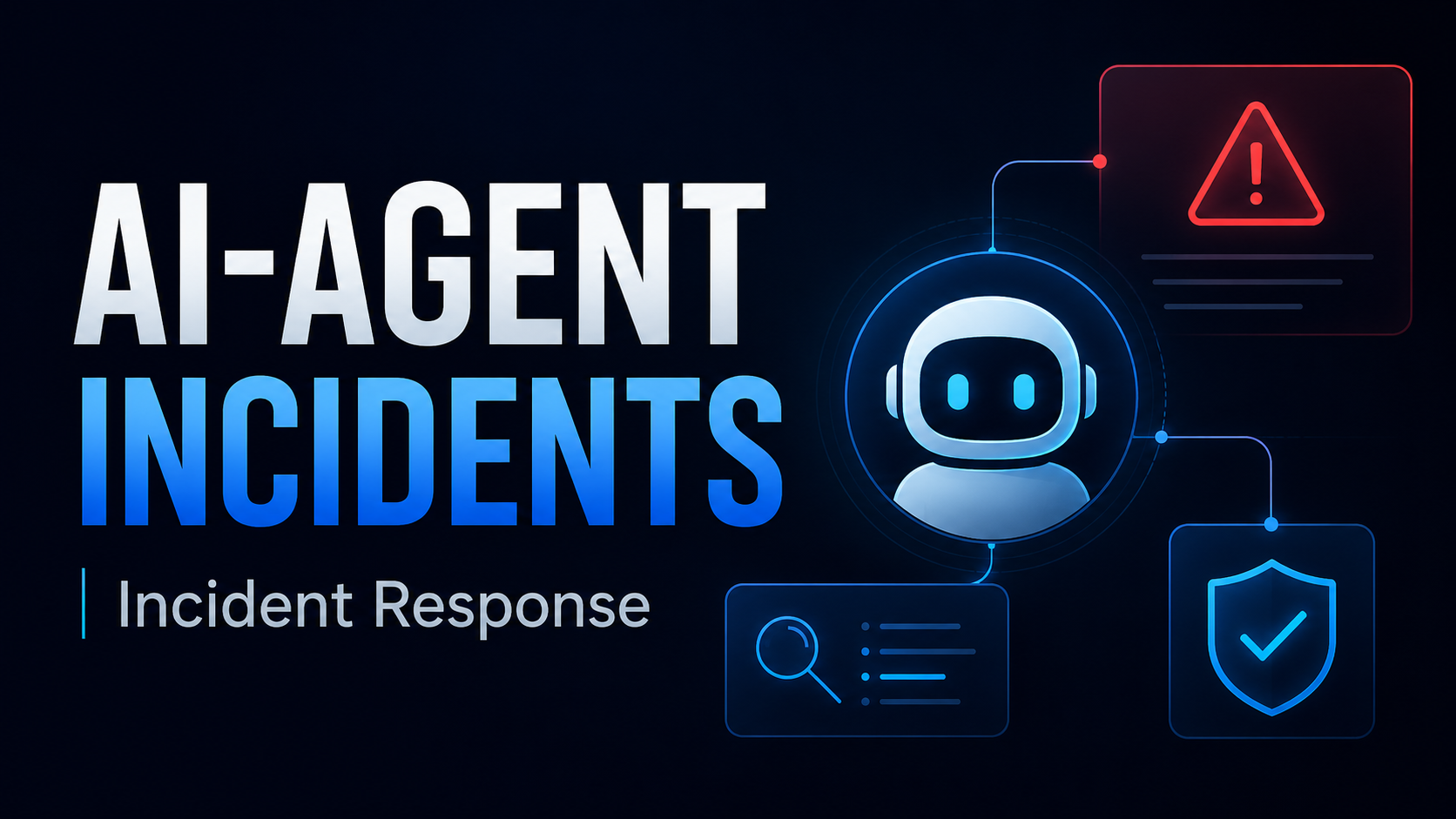
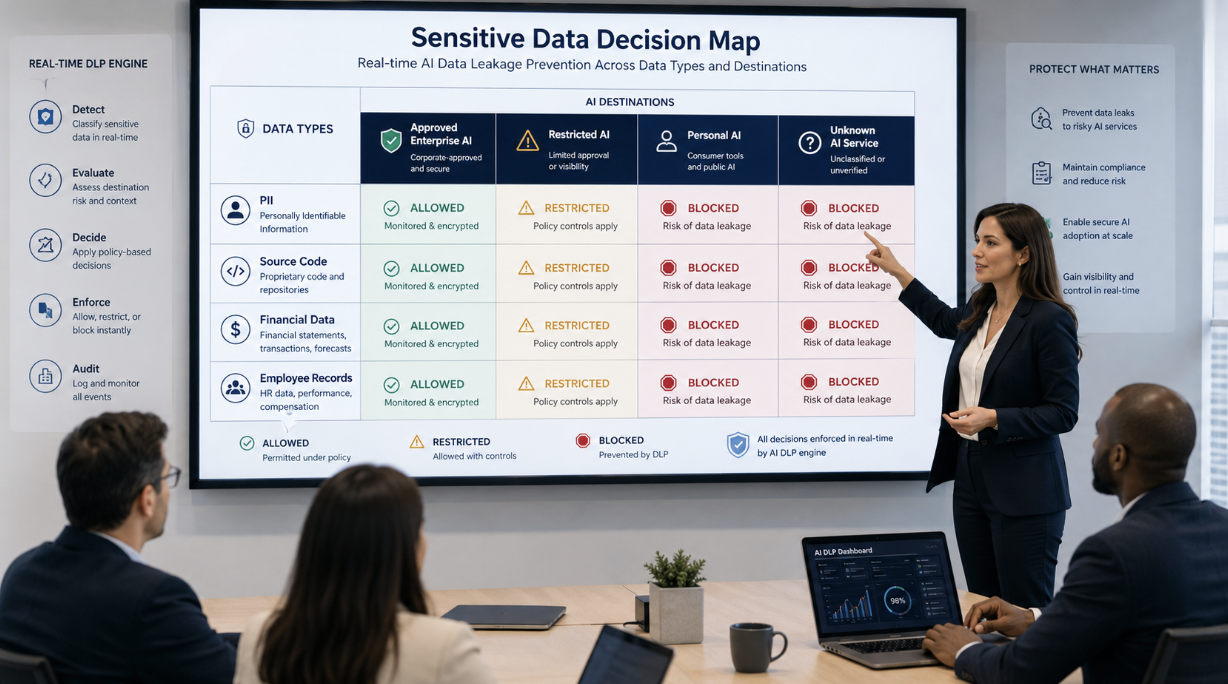
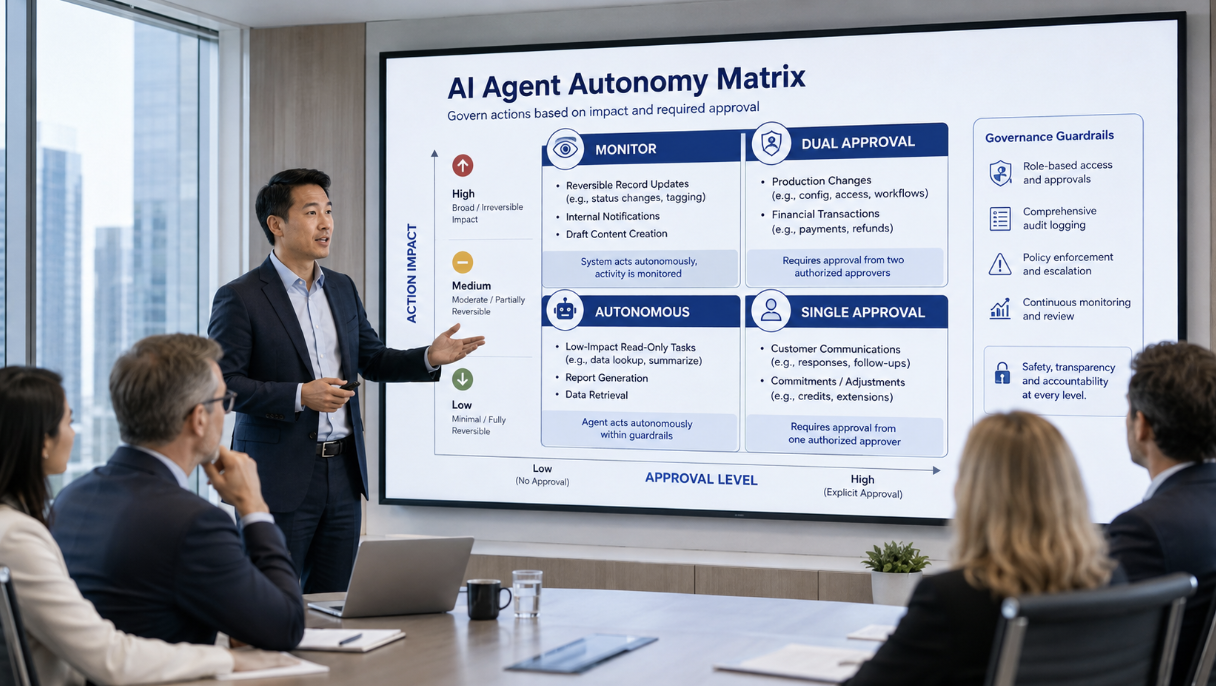
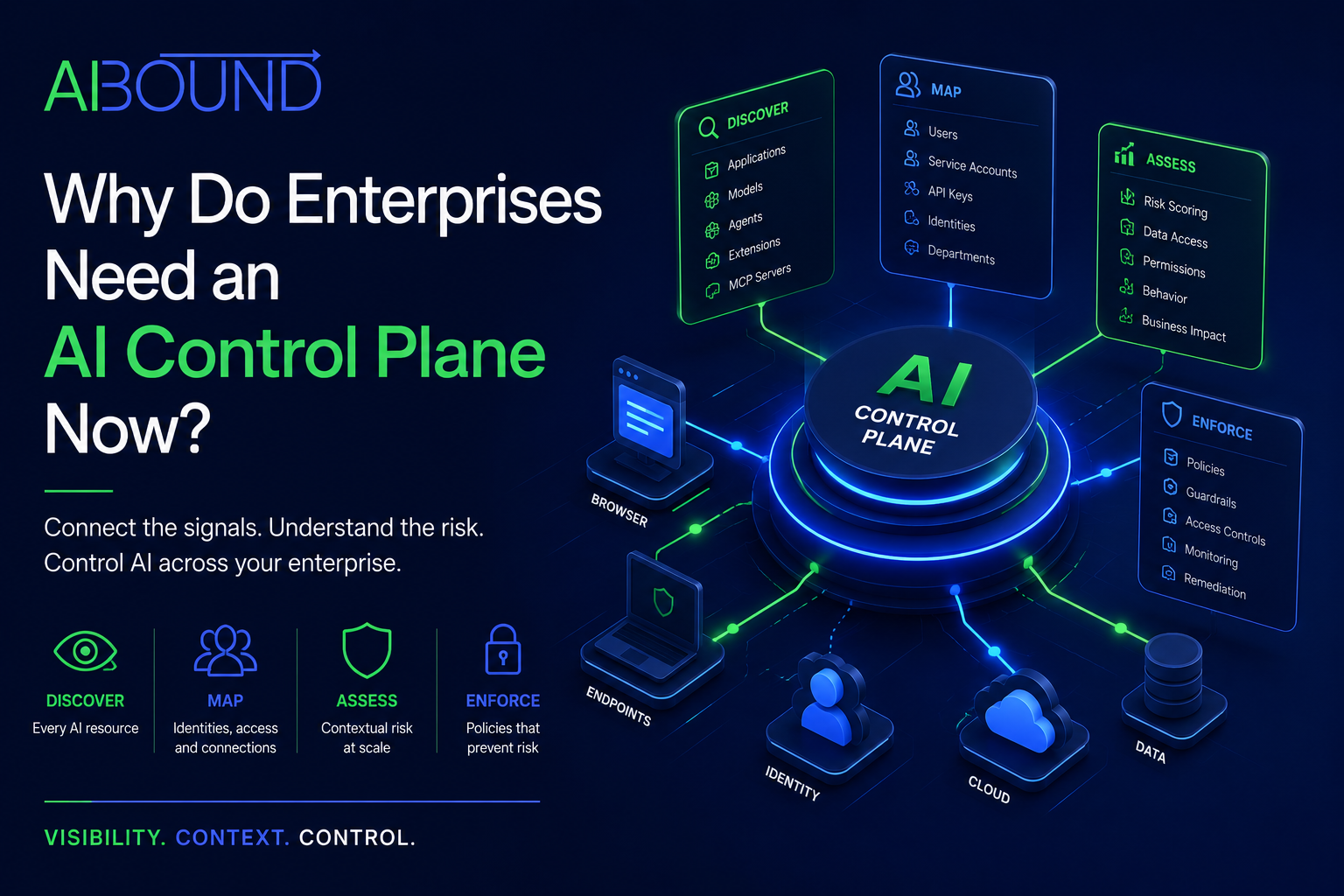
{ "@context": "https://schema.org", "@type": "FAQPage", "mainEntity": [ { "@type": "Question", "name": "What is enterprise AI security in one sentence?", "acceptedAnswer": { "@type": "Answer", "text": "It is the discipline of knowing every AI tool in use across an organization, understanding what data and identities each can reach, and controlling the high-risk ones." } }, { "@type": "Question", "name": "What is an AI control plane?", "acceptedAnswer": { "@type": "Answer", "text": "An AI control plane is a centralized layer that provides visibility, risk assessment, and policy enforcement over all AI resources in an enterprise, from SaaS AI apps and browser extensions to agents, MCP servers, and open-source models." } }, { "@type": "Question", "name": "Which frameworks apply to enterprise AI security?", "acceptedAnswer": { "@type": "Answer", "text": "The EU AI Act, the NIST AI Risk Management Framework, and ISO/IEC 42001 are the primary frameworks. All three assume the organization maintains an inventory and risk classification of its AI systems." } }, { "@type": "Question", "name": "Can existing security tools handle AI risk?", "acceptedAnswer": { "@type": "Answer", "text": "They contribute telemetry but were not designed for it. CASBs see sanctioned SaaS, DLP sees defined data patterns, and EDR sees installed software, but none maps AI tools to the identities they use and the data they can reach. Purpose-built platforms like AIBound correlate these signals into AI-specific risk." } }, { "@type": "Question", "name": "How long does it take to establish AI visibility?", "acceptedAnswer": { "@type": "Answer", "text": "With an agentless approach that reuses existing telemetry, organizations typically see a full AI inventory with risk grades within 24 hours of connecting their stack." } } ] }