
.png)
AI adoption is accelerating faster than any technology shift in the past decade. But with that speed comes a new and rapidly growing risk: shadow AI.
Employees are using AI tools, agents, and models—often without approval, visibility, or security controls. For CISOs and security teams, the challenge is clear: You can't secure what you can't see.
In this guide, we'll break down exactly how to detect shadow AI across your organization—and how leading security teams are staying ahead of it in 2026.
What Is Shadow AI?
Shadow AI refers to any AI tool, application, agent, or model used within your organization without security or IT approval.
This includes: employees using ChatGPT, Claude, or other AI tools in browsers; AI agents connected to internal systems; developer use of AI copilots or APIs without governance; and unauthorized AI integrations in SaaS platforms.
Unlike shadow IT, shadow AI is more dangerous because it interacts with sensitive data, can autonomously take actions, and evolves quickly and unpredictably.
Why Detecting Shadow AI Is So Difficult
Traditional security tools were not built for AI. Here's why shadow AI detection is challenging:
1. AI usage is fragmented. AI tools span browsers, endpoints, cloud environments, and developer tools. There's no single control point.
2. AI traffic looks like normal traffic. AI usage often blends into HTTPS traffic, SaaS applications, and API calls—making it hard to distinguish from legitimate activity.
3. New tools appear daily. Thousands of AI tools and agents are emerging rapidly. Static allow/block lists can't keep up.
How to Detect Shadow AI (Step-by-Step)
Step 1: Monitor Browser Activity
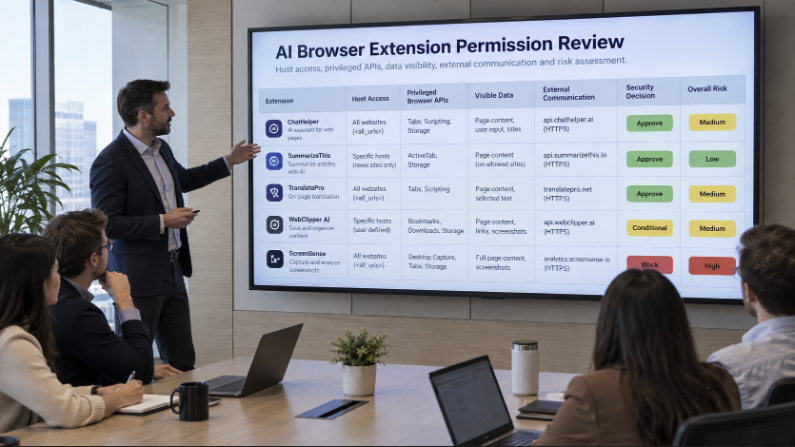
Most shadow AI starts in the browser. Look for usage of AI tools (ChatGPT, Gemini, Claude, etc.), AI browser extensions, and copy/paste behavior involving sensitive data. Browser visibility is your first detection layer.
Step 2: Analyze Endpoint Telemetry
Endpoints reveal installed AI applications, local LLM usage, and developer tools using AI. Key signals include unknown processes, AI-related binaries, and API calls to model providers.
Step 3: Inspect Network Traffic
AI usage often leaves network traces: requests to AI APIs (OpenAI, Anthropic, etc.), traffic to AI SaaS platforms, and data exfiltration patterns. Use network logs to identify high-frequency API calls and large data transfers to AI endpoints.
Step 4: Audit SaaS and Cloud Integrations
Shadow AI is increasingly embedded in SaaS tools. Look for AI plugins and integrations, automated workflows using AI, and AI-powered features enabled without approval.
Step 5: Build a Complete AI Inventory
This is the most critical step. You need to discover all AI apps, agents, and models; map where they exist (endpoint, cloud, browser); and understand who is using them. This becomes your AI inventory—the foundation of AI security.
What Modern Shadow AI Detection Looks Like
Leading organizations are moving beyond fragmented detection methods toward a unified approach that includes centralized AI visibility (a single view of all AI tools, users, and environments), real-time discovery, contextual risk analysis, and continuous automated monitoring.
From Detection to Control
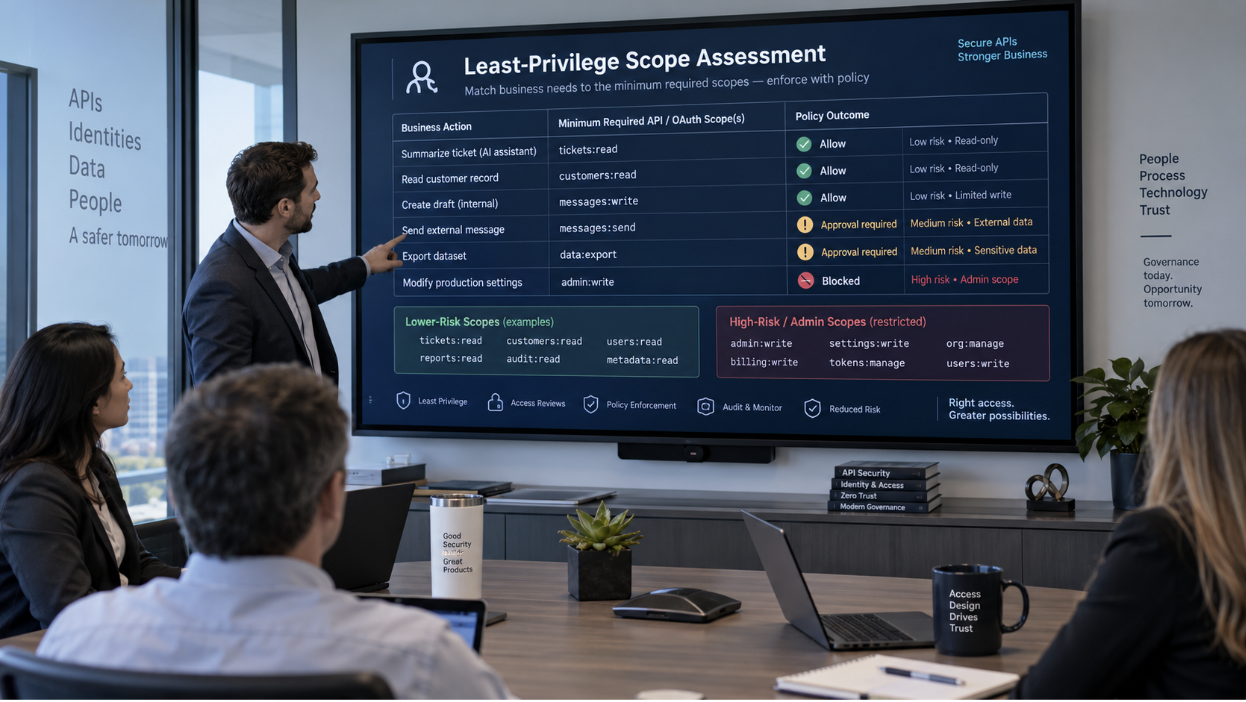
Detection is only the first step. Once shadow AI is identified, security teams need to assess risk (Is this safe?), enforce policy (Allow, restrict, or block), and guide users through education and coaching. This is where organizations move from reactive security to proactive AI governance.
The Future of Shadow AI Detection
In 2026 and beyond, shadow AI detection is evolving into AI Security Control Planes—platforms that discover every AI asset, map relationships across systems, score risk automatically, and enforce policies in real time. This shift is critical as AI becomes embedded across every layer of the enterprise.
How AIBound Helps Detect Shadow AI
AIBound was built specifically to solve this problem. With AIBound, security teams can discover every AI app, agent, and model in real time; build a complete AI inventory across browser, endpoint, network, and cloud; understand what each AI tool accesses and touches; score risk automatically using the Nucleus AI engine; and prevent unauthorized AI usage instantly—all from a single AI Control Plane.
Key Takeaways
Shadow AI is one of the fastest-growing enterprise risks in 2026. Traditional tools can't detect AI usage effectively. Detection requires visibility across browser, endpoint, network, and cloud. AI inventory is the foundation of AI security. Organizations must move from detection to real-time control.
Ready to See It in Action?
If you want to understand how shadow AI exists in your environment today, AIBound can show you—in under 24 hours, with no agents, no network taps, and no disruption. Book a demo to get your complete AI inventory now.